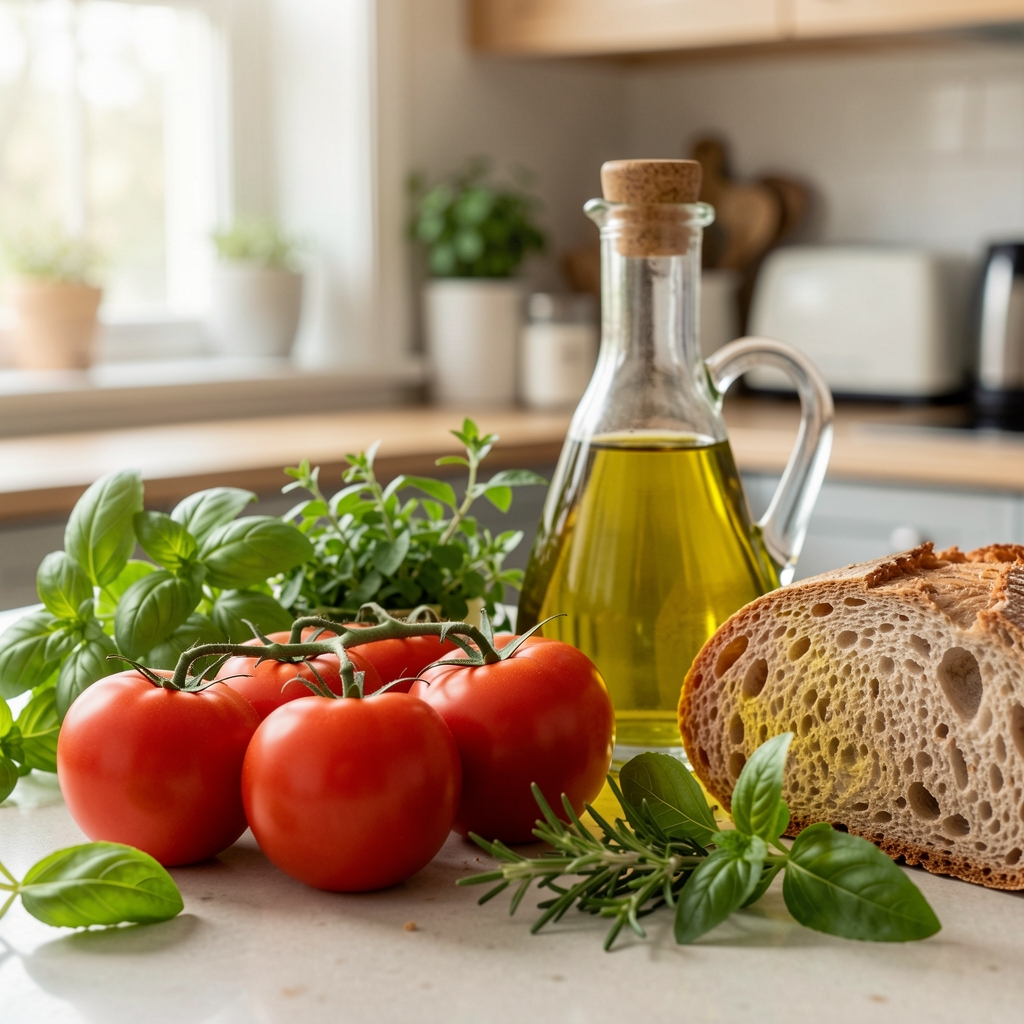
Ingredients
Build variety into meals
Colour, texture and seasonal produce can make a balanced pattern easier to maintain.
Men's wellbeing
A measured guide to food patterns, commonly discussed nutrients and the importance of clinical conversations.
One ingredient rarely explains a whole health story.
A wider view
Meals rich in vegetables, pulses, whole grains and unsaturated fats are often part of a broadly balanced pattern. Tomatoes, oily fish and leafy greens are frequently discussed, but no food should be presented as a treatment.
Urinary symptoms, pain, blood in urine or semen, or changes that concern you should be discussed with a GP. Screening and follow-up decisions depend on age, history and individual risk.
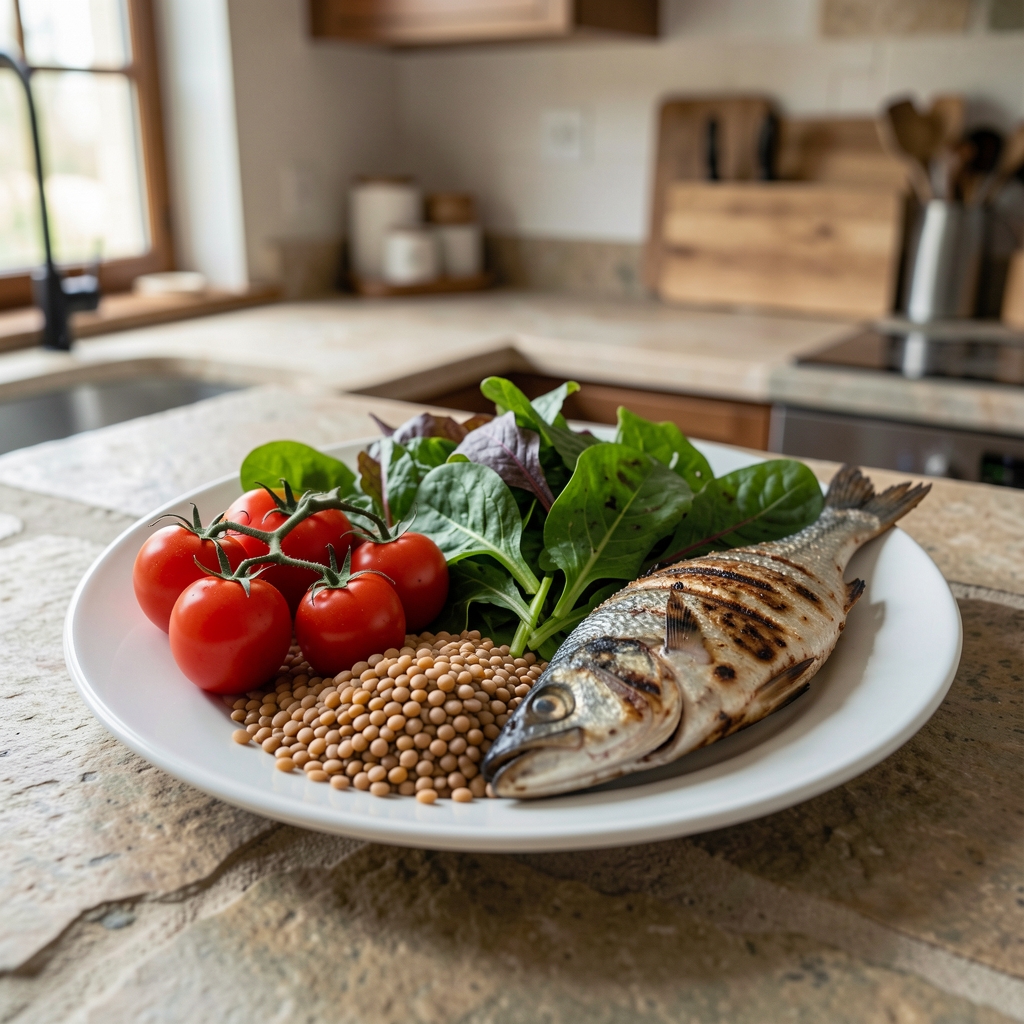
Ingredients
Colour, texture and seasonal produce can make a balanced pattern easier to maintain.
Perspective
Be cautious of supplements or claims that suggest a single food can prevent or reverse disease.
Conversation
Write down symptoms, medicines and family history before an appointment.
Food pattern overview
| Food group | What it contributes | Context to remember |
|---|---|---|
| Tomatoes | Colour, flavour and nutrients within varied meals | A single food does not determine personal risk |
| Pulses | Fibre, plant protein and useful meal texture | Preparation and tolerance vary between people |
| Leafy greens | Variety and micronutrients | Include them as part of a wider pattern |
| Oily fish | A source of protein and particular fats | Individual dietary needs and preferences matter |
These terms are deliberately broad. If a reader is worried about a symptom or family history, a GP can explain what assessment is appropriate.
A useful sequence
Seek urgent help for severe or rapidly worsening symptoms. Novalus cannot assess an individual situation through an article or contact form.
“A plate can be part of a health pattern, but it is not a diagnosis.”
“Good men's health conversations include symptoms, history and access to care.”
“Food guidance is more useful when it leaves room for culture and preference.”
Urinary changes, pain, blood in urine or semen, sexual-function changes, or any symptom that concerns you should be discussed with a qualified professional. Do not rely on an article to decide whether an assessment is needed.
Read the editorial disclaimerBefore an appointment, note when a symptom started, whether it changes, and what makes it better or worse. It can help to record questions about tests, follow-up and the reasons behind a recommendation. Do not delay urgent care while preparing notes.
Readers can contact Novalus with factual editorial queries at 27 Elmwood Lane, Stratford-upon-Avon, Warwickshire, CV37 6BB, United Kingdom, or +44 161 893 7201. We cannot assess symptoms through correspondence.